How AI Works Behind the Scenes (Explained Like You’re 15)

How AI Works Behind the Scenes (Explained Like You’re 15)
Artificial Intelligence (AI) sounds complicated, futuristic, and sometimes even scary. But behind the scenes, AI is not magic. It’s a combination of data, math, patterns, and smart programming working together.
In this guide, we’ll explain how AI works step by step, using simple examples, everyday language, and zero jargon overload just like explaining it to a 15-year-old.
What Is Artificial Intelligence (In Simple Words)?
Artificial Intelligence is a way to make computers act smart.
Instead of giving a computer exact instructions for every situation, we teach it using data, so it can:
- Learn from examples
- Recognize patterns
- Make decisions
- Improve over time
Think of AI like a student who learns by practice, not by memorizing rules only.
The Core Idea Behind AI (The Big Secret)
Here’s the key idea:
AI learns from data the same way humans learn from experience.
If you see 1,000 pictures of cats, you eventually know what a cat looks like.
AI does the same but using numbers and patterns instead of eyes and brain.
Step 1: Data – The Fuel That Powers AI
AI cannot think without data.
What kind of data?
- Images (photos, videos)
- Text (articles, chats, emails)
- Numbers (sales data, scores, sensor readings)
- Audio (voice recordings)
📌 Example:
If you want AI to recognize dogs, you feed it thousands of dog photos, labeled as “dog”.
No data = no intelligence.
Step 2: Training – Teaching AI Using Examples
Training is where AI learns.
During training:
- The AI looks at data
- Makes a guess
- Checks if the guess is correct
- Adjusts itself to do better next time
This process repeats thousands or millions of times.
📌 Simple analogy:
Like solving math problems → checking answers → learning from mistakes.
Step 3: Algorithms – The Brain Rules
An algorithm is a set of rules that tells AI how to learn.
Some algorithms are good at:
- Finding patterns
- Sorting information
- Making predictions
Popular AI learning methods include:
- Supervised learning (learning with answers)
- Unsupervised learning (finding patterns on its own)
- Reinforcement learning (learning through rewards)
📌 Think of algorithms as learning strategies, not intelligence itself.
Step 4: Machine Learning – How AI Improves Over Time
Machine Learning (ML) is a part of AI where machines learn from data automatically.
Instead of saying:
“If this happens, do that”
We say:
“Here are examples — figure it out yourself.”
Example:
- AI sees house prices
- Learns size + location patterns
- Predicts prices for new houses
The more data it sees, the smarter it becomes.
Step 5: Neural Networks – AI’s Fake Brain
This is where things get really interesting.
Neural networks are inspired by the human brain.
They are made of layers:
- Input layer (receives data)
- Hidden layers (process information)
- Output layer (gives results)
Each layer learns small patterns, which combine into bigger understanding.
📌 Example:
In face recognition:
- One layer learns edges
- Another learns eyes and nose
- Final layer recognizes a face
This is called Deep Learning.
Step 6: Deep Learning – AI at an Advanced Level
Deep learning uses very large neural networks and huge amounts of data.
It powers:
- Chatbots like ChatGPT
- Voice assistants (Alexa, Siri)
- Image recognition
- Self-driving cars
Deep learning works best when:
- Data is massive
- Problems are complex
- Patterns are hard for humans to code manually
Learn More about deep learning here.
Step 7: Testing – Making Sure AI Doesn’t Mess Up
After training, AI is tested using new data it has never seen before.
This checks:
- Accuracy
- Bias
- Errors
- Reliability
If AI performs poorly:
- It is retrained
- Data is improved
- Algorithms are adjusted
This step is crucial before real-world use.
Step 8: Real-World Use – AI in Action
Once trained and tested, AI is deployed into apps, websites, and systems.
You use AI every day when:
- Netflix recommends shows
- Google completes your searches
- Email filters spam
- Maps suggest faster routes
Most AI runs quietly in the background, without you noticing.
Does AI Think Like Humans?
Short answer: No.
AI does not:
- Have emotions
- Understand meaning
- Have consciousness
AI is very good at:
- Recognizing patterns
- Processing data fast
- Making predictions
But it only does what it was trained to do.
Why AI Sometimes Makes Mistakes
AI mistakes happen because:
- Data is incomplete
- Data is biased
- Situations are new
- Humans trained it poorly
📌 AI reflects the quality of data and decisions humans give it.
How AI Keeps Getting Smarter
AI improves through:
- More data
- Better algorithms
- Faster computers
- Continuous feedback
This is why AI today is far better than AI 10 years ago.
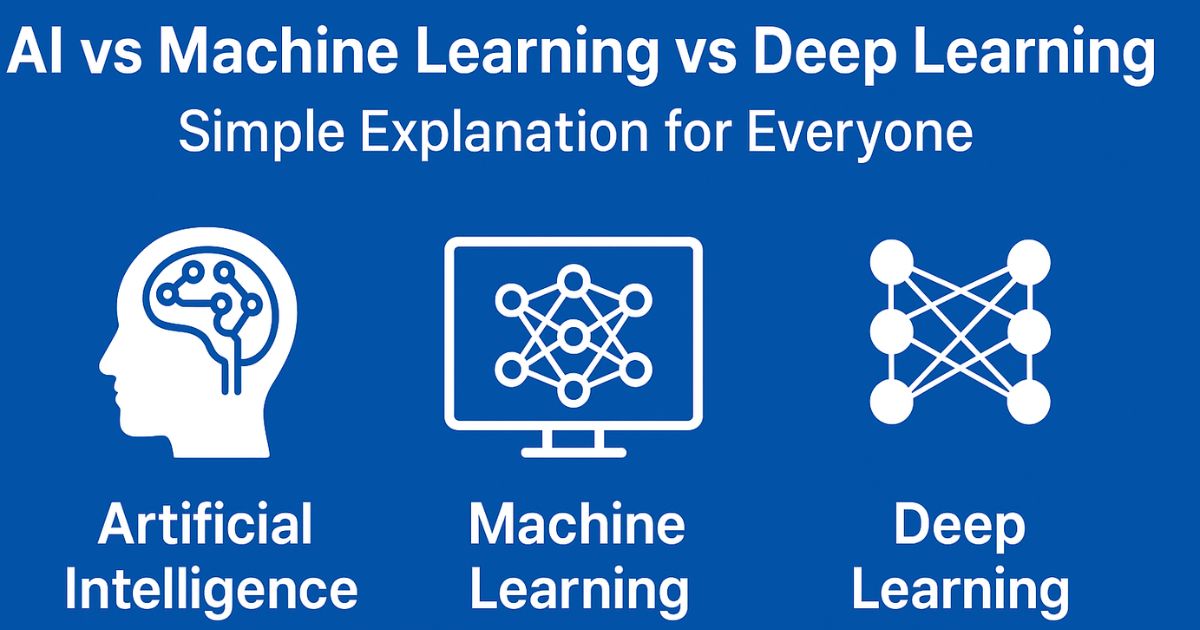
This learning process becomes clearer when comparing AI vs machine learning vs deep learning.
AI Explained in One Line
AI works by learning patterns from data, using algorithms and neural networks, to make decisions and predictions automatically.
Frequently Asked Questions
AI learns by analyzing data, finding patterns, adjusting its model based on errors, and repeating the process until it produces accurate results.
Final Thoughts
AI isn’t magic.
It’s data + learning + smart design.
Once you understand what’s happening behind the scenes, AI becomes less mysterious and more fascinating and even approachable.
Whether you’re a student, business owner, or just curious, knowing how AI works helps you use it better and smarter.


I’m Manas Ranjan Sahoo: Developer/Founder of “Webtirety Software”. I’m a Full-time Software Professional and committed to expanding Webtirety Software into a thriving platform that empowers businesses and individuals alike. I love to Write Blogs on Software, Technology, eCommerce, SEO, and Digital Marketing.