The Anatomy of a High-Performance Web Application | Architecture, Speed & Scalability
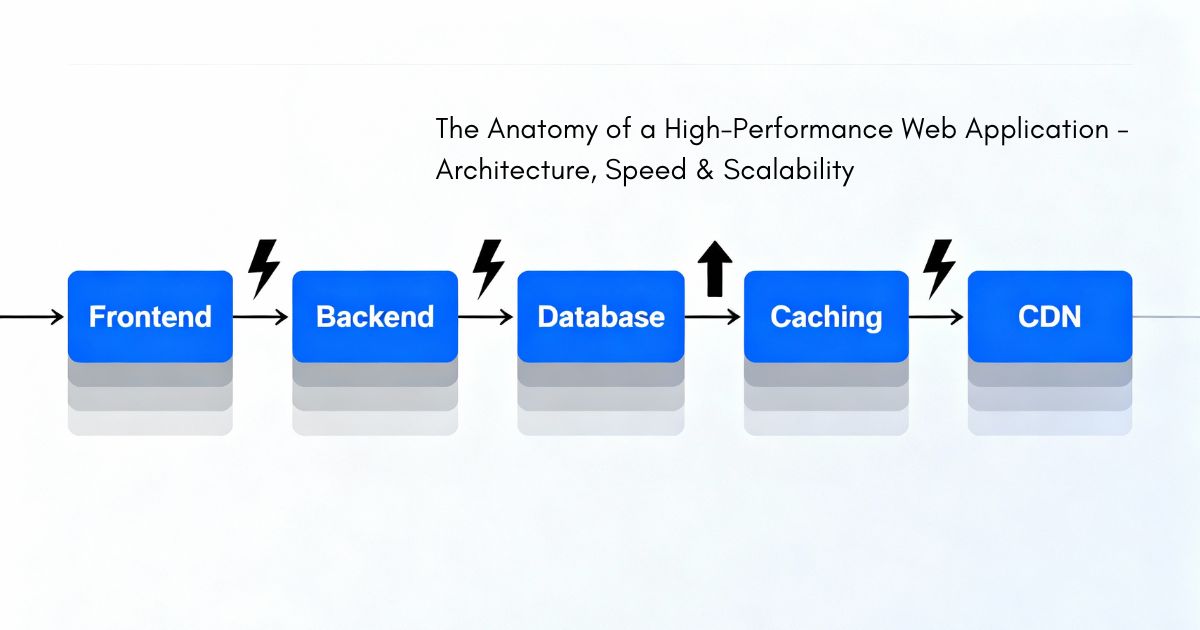
The Anatomy of a High-Performance Web Application
In today’s fast-paced digital world, your web application isn’t just a product it’s your brand’s heartbeat. Whether it’s a SaaS dashboard, an eCommerce platform, or an enterprise tool, speed, scalability, and reliability make or break user experience.
A high-performance web application isn’t about fancy code alone it’s about how every layer, from architecture to UX, works together to deliver speed, stability, and satisfaction.
Recommended Reading: A Developer’s Perspective: Building Secure, Scalable Business Software
Let’s break down what really powers a fast, modern, and future-proof web app and how your business can build one that scales gracefully.
1. Understanding Web Application Performance
Performance isn’t just load time. It’s a blend of responsiveness, efficiency, and resilience across devices, browsers, and network conditions.
Think of performance as the user’s first impression and their reason to stay.
A well-optimized web app:
- Loads quickly (under 3 seconds ideally)
- Feels responsive, even under load
- Handles traffic spikes gracefully
- Maintains data integrity and security
- Scales without expensive re-engineering
When users experience lag, broken pages, or downtime, conversion rates and brand trust plummet. According to Google, a 1-second delay in load time can reduce conversions by up to 20%.
2. The Core Architecture: Building the Backbone
At the heart of every high-performing web application lies a well-planned architecture. It defines how efficiently your system handles requests, scales, and evolves.
a. Choose the Right Framework and Stack
Your tech stack sets the tone for speed and flexibility.
Popular combinations include:
- Frontend: React, Vue.js, or Next.js for fast rendering
- Backend: Node.js, Laravel, or Django for asynchronous processing
- Databases: PostgreSQL, MongoDB, or MySQL for flexible data handling
The best stack is one that fits your project’s goals not just what’s trending.
b. Adopt a Microservices or Modular Approach
Breaking your app into independent, reusable modules helps you scale specific features without overloading the entire system. This also enables continuous deployment and easier maintenance.
c. Use Caching Strategically
Caching frequently accessed data (via Redis, Memcached, or CDN) can drastically cut load times and database hits. The right cache strategy ensures faster page rendering and smoother user experience.
3. Frontend Optimization: Speed That Users Feel
Users judge performance visually milliseconds matter here.
a. Minify and Bundle Assets
Minify CSS/JS files and use lazy loading for images and videos. Tools like Webpack or Vite can automate this for you.
b. Optimize Images and Media
Use next-gen formats like WebP, adaptive image sizes, and responsive design to cut bandwidth usage by up to 40%.
c. Leverage Browser Caching
Tell browsers to reuse assets via proper caching headers it reduces repeated network calls and improves repeat visit speed.
d. Implement a Content Delivery Network (CDN)
Distribute static assets geographically so they load from the nearest edge server. CDNs like Cloudflare or AWS CloudFront can reduce latency by 50% or more.
4. Backend Efficiency: The Engine Room
Your backend quietly powers everything the user doesn’t see but always feels.
a. Optimize Database Queries
Avoid heavy joins, use indexes, and batch your queries.
Profiling tools like New Relic or AppSignal can highlight bottlenecks.
b. Use Asynchronous Processing
Background jobs and message queues (RabbitMQ, Celery, or Kafka) let the app handle tasks efficiently without blocking main threads.
c. Scale with Load Balancers
Distribute traffic across servers using load balancers. This prevents one machine from becoming a bottleneck during peak hours.
d. API Performance and Versioning
Keep APIs lightweight, cache responses, and use proper pagination. A well-documented API also helps external integrations without slowing your app.
5. Security and Reliability: Performance’s Silent Partners
A fast app that isn’t secure won’t stay fast for long.
High-performance means being able to withstand attacks, failures, and misuse gracefully.
Key best practices:
- Use HTTPS and enforce strong authentication (OAuth 2.0, JWT)
- Implement rate limiting to prevent abuse
- Regularly patch dependencies
- Backup data and use failover mechanisms
Security audits and uptime monitoring tools (like UptimeRobot or Datadog) can catch small issues before they become outages.
6. Scalability: Preparing for Growth
Today’s 100 users can be tomorrow’s 10,000.
High-performance web apps are built with scalability baked in.
a. Horizontal Scaling
Add more servers or containers as traffic grows. Cloud platforms like AWS, Google Cloud, or Azure make it easier through auto-scaling.
b. Vertical Scaling
Boost the capacity of existing servers (CPU, memory) when needed often a good short-term solution.
c. Cloud-Native Infrastructure
Using Docker, Kubernetes, and CI/CD pipelines ensures consistent deployments and faster iteration cycles.
7. Monitoring and Continuous Improvement
Performance isn’t a one-time checklist. It’s a habit.
a. Measure Everything
Use analytics tools like Google Lighthouse, GTmetrix, or PageSpeed Insights to track front-end performance.
b. Monitor Real User Metrics
Tools like New Relic and Datadog measure what real users experience, not just synthetic benchmarks.
c. Automate Alerts
Set up performance alerts catch slow API calls, downtime, or traffic surges early.
d. Iterate Relentlessly
Performance tuning is ongoing. Every small gain compounds over time, especially when tied to user satisfaction and SEO.
8. UX and Accessibility: Performance Beyond Speed
High performance also means clarity and usability.
A fast app that confuses users still loses them.
- Follow WCAG accessibility standards for inclusivity
- Keep navigation intuitive and responsive
- Use micro-interactions wisely to guide users
- Maintain visual consistency across screens
Faster pages + frictionless UX = stronger retention and conversions.
9. SEO and Discoverability: Because Performance Affects Rankings
Google now considers Core Web Vitals (LCP, CLS, FID) as ranking signals.
This means site performance directly influences SEO.
To stay optimized:
- Prioritize fast load and interactivity
- Use schema markup for better indexing
- Optimize meta titles, descriptions, and structured data
- Implement proper canonical tags and sitemap
A well-optimized web application doesn’t just load fast it gets found fast.
10. The Webtirety Edge: Building High-Performance Apps That Scale
At Webtirety, we believe high performance isn’t just technical its strategic. From startups to enterprises, our web and SaaS solutions are built with scalability, security, and speed at their core.
Whether it’s Aero POS (for retail/wholesalers/departmental stores), RestroFlow (for restaurants), or Nexus (for teams and businesses), each platform is engineered with modern architecture and performance-first principles.
Conclusion: Build Once, Perform Always
A high-performance web application is not the result of luck it’s the outcome of smart architecture, consistent optimization, and relentless attention to detail.
Performance isn’t a project milestone; it’s a mindset that drives every decision from choosing a stack to caching strategies, from UX to deployment.
And when done right, your web app won’t just run faster it’ll grow further.
explore our custom web development solutions to optimize your existing app for scalability, speed, and reliability.
🙋♂️Frequently Asked Questions (FAQs)
A high-performance web application loads quickly, processes requests efficiently, scales under heavy traffic, ensures security, and provides a smooth, responsive user experience. It combines optimized frontend design, clean backend logic, strong architecture, and continuous monitoring.
Performance directly affects user satisfaction, SEO rankings, conversion rates, and revenue. Even a 1-second delay in load time can reduce conversions by 7%–20%, making performance a critical business priority.
Modern high-performance apps often use microservices, modular monoliths, or cloud-native architectures. These approaches support scalability, fault isolation, and faster deployments.
You can optimize assets (CSS/JS), implement lazy loading, compress images, use a CDN, and leverage browser caching. Reducing render-blocking scripts also improves perceived performance.
Optimizing database queries, using caching (Redis/Memcached), implementing asynchronous processing, load balancing, and fine-tuning APIs are essential backend performance practices.
Caching stores frequently accessed data so the app doesn’t fetch it repeatedly from the database. This reduces server load and drastically improves response time.
Popular tools include Google Lighthouse, GTmetrix, PageSpeed Insights, New Relic, Datadog, and AppSignal. They help track Core Web Vitals, server health, and real-user metrics.
Scalable apps handle increased traffic without crashing or slowing down. Techniques like horizontal scaling, cloud auto-scaling, and containerization (Docker/Kubernetes) help maintain performance under growth.
Yes. Google uses Core Web Vitals (LCP, FID, CLS) as ranking signals. Faster load times and smoother interactions improve search visibility and organic traffic.
Webtirety uses modern frameworks, optimized architecture, cloud-native deployments, and continuous performance monitoring. Their platforms AeroPOS, Nexus, and RestroFlow are engineered for speed, scalability, and reliability.


I’m Manas Ranjan Sahoo: Developer/Founder of “Webtirety Software”. I’m a Full-time Software Professional and committed to expanding Webtirety Software into a thriving platform that empowers businesses and individuals alike. I love to Write Blogs on Software, Technology, eCommerce, SEO, and Digital Marketing.